How we built AirZippy: StashBase backend, managed from SudoTerm, built by Deep Automate
A Postgres database on StashBase, a TypeScript API, static pages with live prices, WhatsApp on Flowgento, run from SudoTerm and built by Deep Automate.
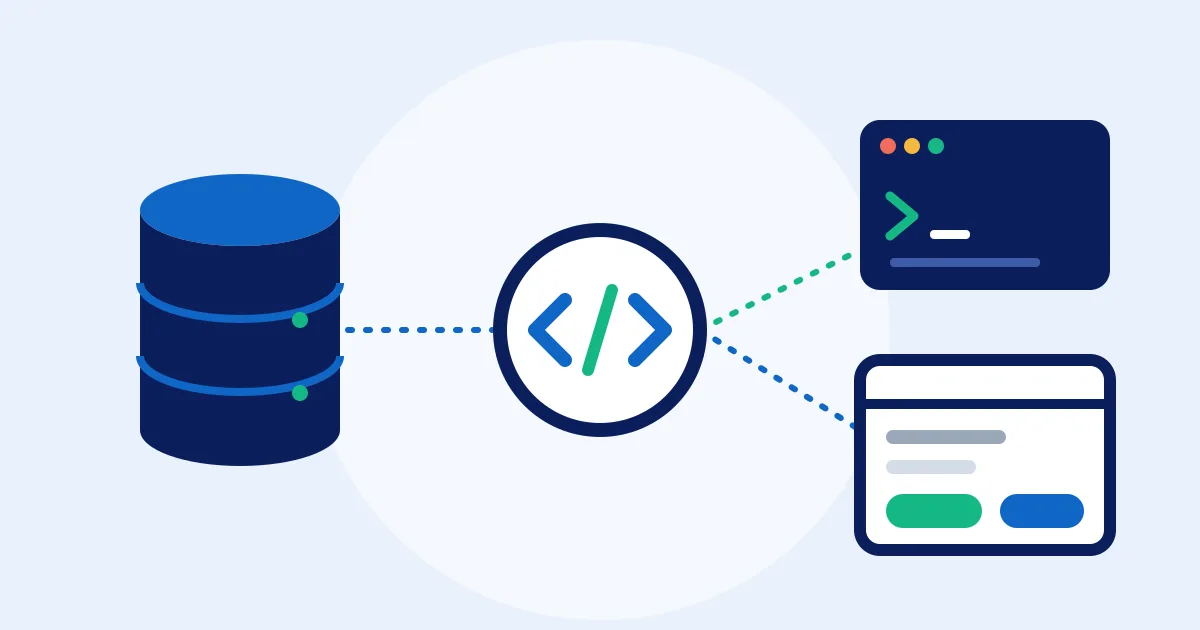
AirZippy is a small shop with a lot of moving parts. It has hundreds of plans whose prices follow a wholesale supplier, payments, QR codes that must arrive within minutes, a WhatsApp bot, and pages that have to show today's price. This post describes how it is put together. It covers the architecture only: no passwords, keys or server addresses.
The short version
- Backend data: a Postgres database on StashBase.
- API: TypeScript on Node.js.
- Website: plain HTML pages generated by a small build script.
- WhatsApp: Flowgento.
- Run and maintained from: SudoTerm.
- Built by: Deep Automate, our own agency.
The database: a StashBase project
All of AirZippy's records live in one Postgres database: plans, countries, stock, orders, payments, customers, the WhatsApp conversation log and the blog. That database is a project on StashBase. StashBase gives each project its own Postgres schema and its own database role, so other projects can't see our tables.
We chose it for three reasons:
- It is plain Postgres. We query it with ordinary SQL and the Prisma toolkit, and nothing ties our data to one vendor.
- Projects never pause. A shop that sells to travellers at 3 a.m. can't have a database that sleeps.
- Backups. StashBase dumps every project daily to off-site storage. We also take our own full dump before every change to the database's structure.
Every database change is a written migration that adds things, kept in version control with the code.
The API
The API is TypeScript running on Node.js with the Express framework. It does the work customers never see:
- Prices. It reads the supplier's catalogue and wholesale prices, and works out our selling price with GST.
- Orders and payments. It creates the order and takes payment through Razorpay. A payment is only trusted once it is confirmed server to server.
- Delivery. It assigns an eSIM to the order and sends the QR code to WhatsApp and email together.
- The WhatsApp bot. The bot's rules and its AI helpers run here too.
About 490 automated tests run against a separate test database. Payment and supplier calls are replaced by stand-ins during tests, so a test never takes real money or orders a real eSIM.
The website: static pages, live prices
airzippy.com is not a single-page app. A small Node.js build script writes plain HTML for every page:
- a page for each of the 485 plans;
- a page for each destination;
- the blog, the sitemaps and the plan feeds.
Prices are written into the HTML itself, so a page shows its price even with JavaScript off. The build refuses to finish if a plan page's visible price differs from its structured data or the catalogue.
When a public fact changes (a price, a new plan, a plan sold out), the site rebuilds itself. That's why the prices in posts like this one are always current:
| Plan | Price today (incl. GST) |
|---|---|
| Singapore 3 GB, 7 days | ₹299 |
| Europe (42 countries) 5 GB, 30 days | ₹649 |
| Global (66 countries) 5 GB, 10 days | ₹749 |
WhatsApp: Flowgento
Every WhatsApp message in and out goes through Flowgento, on the official WhatsApp Cloud API. That covers the bot's replies, order confirmations and QR deliveries. Our team answers customers in Flowgento's shared inbox. We wrote a separate post on how the bot runs on Flowgento, with the numbers.
Running it: SudoTerm
AirZippy is run and maintained from SudoTerm, a self-hosted web terminal. Its sessions keep running when a connection drops or a laptop lid closes, so a long job, such as a full test run, a site build or a database backup, finishes whatever happens to the network. It also works from a phone, which matters when something needs a look away from a desk.
Secrets stay out of the code
Payment keys, the database password, API keys and partner secrets are never in the code or in version control. They live in a secrets manager and are handed to the programs when they start. Our build fails on purpose if it is run without them, so it can't quietly use the wrong payment key.
Who built it
AirZippy was designed and built by Deep Automate, our own agency for AI automation, WhatsApp bots and websites. AirZippy, Flowgento and the other products are listed on our products page.
FAQ
What is AirZippy's backend built on?
A Postgres database hosted as a StashBase project, with an API written in TypeScript on Node.js.
Is the AirZippy website a React or Next.js app?
No. It's plain HTML generated by a small build script, with a little JavaScript for the checkout, search and chat. Prices are in the HTML, so pages work without scripts.
How are payments kept safe?
Payments go through Razorpay. An order is only marked paid after AirZippy's server confirms the payment with Razorpay directly, not because the browser says so.
Are customer details stored in the website?
No. The website is static pages. Orders and customer details live only in the database behind the API.
Who can I contact about building something similar?
Deep Automate, the agency that built AirZippy, at deepautomate.tech.